.png)
The Best Vegetarian Restaurants in Edinburgh: A Guide From a Kitchen That Actually Cooks It

When people find out that half of our menu at Nectar is vegetarian or vegan, the reaction is usually some version of pleasant surprise. A Mediterranean gastro bar that entered the Edinburgh scene leading with cocktails and Greek sharing plates does not immediately read as a venue that takes plant-based dining seriously.
But that surprise says more about the assumptions people bring to Mediterranean food than it does about the food itself. Because in the Greek kitchen, vegetables have never been an afterthought. They have always been the point.
Why Greek Food Has Always Been Plant-Based Friendly
I want to start here, before the restaurant guide, because I think it matters.
I remember the first time I lived with the Tamousis family, the people who would eventually become my co-founders at Nectar. I would watch Panos ask his mother not to cook meat for dinner. Not because he was vegetarian. Not because anything was wrong with the meat. Simply because he had been eating it for several days in a row and wanted vegetables instead.
For me, raised on a diet where meat felt like the natural centre of every meal, this was genuinely confusing. In my world, you ate meat until there was no more meat and then you thought about what else to have. In the Greek kitchen, it does not work like that. Vegetables and meat exist in the same register. Neither was more important. Neither was a substitute for the other. They were simply different expressions of the same approach to eating well.
That balance is not accidental. It is structural, built into Greek food culture over centuries.
The tradition that explains it most clearly is called lathera, a word that translates roughly as oily dishes, derived from the Greek word for olive oil. Lathera is an entire category of Greek cooking built around vegetables slow-cooked in generous amounts of olive oil, typically with tomatoes, garlic and herbs. These are not side dishes. They are main courses. They are what a Greek household eats for dinner several nights a week, and they have been doing so for generations.
Fasolia is the most iconic example. Bean soup, considered by many Greeks to be the national dish, built on dried beans, tomato, olive oil, onion and whatever herbs the kitchen has to hand. It is deeply sustaining, deeply comforting, and completely plant-based by default. It is the dish Margarita makes when the weather turns cold in Edinburgh and she wants something that feels like home.
Arakas is another. Peas slow-cooked in olive oil with tomato, dill and onion until the liquid reduces and concentrates into something richer than the sum of its parts. Again, a main course. Again, entirely plant-based. Again, something Margarita prepares as a matter of course because it is the food she grew up with, not because anyone asked for a vegetarian option.
Fasolakia, green beans braised slowly in olive oil and tomato with potatoes and herbs, follows the same pattern. The cooking method is patient. The olive oil is not decorative. It is structural, the vehicle through which the vegetables develop flavour and the sauce acquires body. These are not quick dishes. They require the same care and attention that meat cookery demands, which is part of why they produce results that are just as satisfying.
There is also a religious dimension to the prominence of vegetables in Greek cooking that is worth understanding. The Greek Orthodox tradition involves significant periods of fasting across the year, during which meat and dairy are restricted. For a country where Orthodox Christianity has been central to daily life for centuries, this meant that generations of Greek cooks became extraordinarily skilled at producing meals from vegetables, pulses and olive oil that were genuinely satisfying rather than merely nutritious. The lathera tradition flourished partly because it had to, and the skills developed during those fasting periods became embedded in the Greek culinary identity long after the strictest religious observance had softened.
Greeks consistently have among the highest per capita vegetable consumption in the world. That statistic does not happen by accident. It happens because a culture decided, a very long time ago, that vegetables cooked with care and good olive oil are worth eating not as a concession to dietary preference but as a genuine pleasure.
That philosophy is what we try to bring to the menu at Nectar. When we write about Greek food and why it is built around freshness rather than complexity, this is part of what we mean. The vegetables are not an accommodation. They are the kitchen.
Nectar and Plant-Based Dining
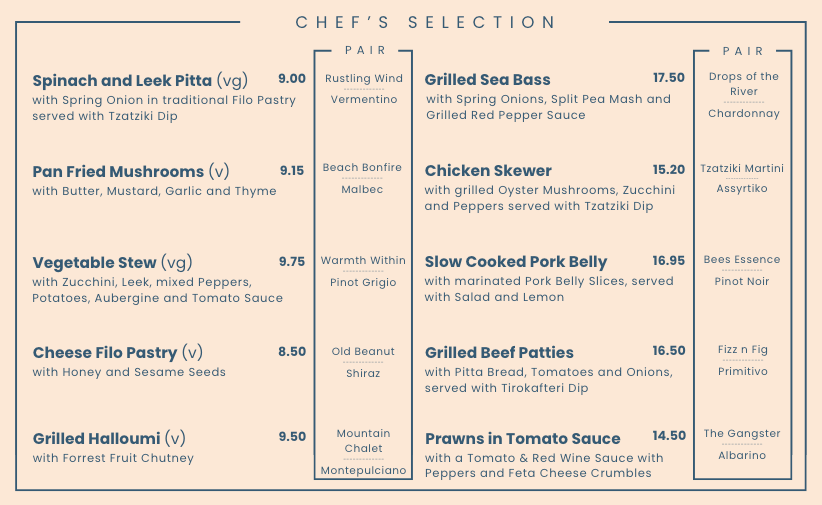
Half of the Chef's Selection at Nectar is vegetarian or vegan. That split is not a marketing decision. It is a reflection of how the Greek kitchen actually works.
The Spinach and Leek Pitta is made from Margarita's family recipe, never shared, built entirely from vegetables and pastry. The Pan Fried Mushrooms with butter, mustard, garlic and thyme are a dish that demonstrates what a single vegetable can do when it is treated with the same care as a prime cut of meat. The Vegetable Stew with zucchini, leek, peppers, potatoes, aubergine and tomato sauce is lathera in its most direct form, a dish that could have come from any Greek kitchen across any generation.
The Cheese Filo Pastry and Grilled Halloumi are vegetarian. The sharing plate format means a table of mixed dietary preferences can order together without anyone feeling like they are eating a reduced version of the experience. That is, genuinely, one of the things we are most proud of.
If you are vegetarian or vegan and visiting Edinburgh, our menu is here and we would love to have you in.
The Best Vegetarian and Vegan Restaurants in Edinburgh
Edinburgh has become one of the most progressive cities in the UK for plant-based dining. A recent survey placed Edinburgh second only to Glasgow for vegan population density, and the restaurant scene reflects that. What follows is a genuine guide to the venues worth your time.
Hendersons
Hendersons is the closest thing Edinburgh has to a vegetarian institution. The original Hanover Street location opened in the 1960s and ran for nearly sixty years before closing during the pandemic. The current Barclay Place location, led by the founder's grandson, carries the same spirit forward with a more contemporary menu built on local and seasonal produce. The cooking is ambitious and consistently executed. It is the natural answer to the question of where to go for a proper vegetarian dinner in Edinburgh.
David Bann
David Bann sits just off the Royal Mile and has been one of Edinburgh's most respected vegetarian restaurants for years. The approach leans toward fine dining, with a globally influenced menu that brings genuine creativity to plant-based cooking. It takes vegetarian food seriously in the way that a serious kitchen takes any food seriously, as a craft problem worth solving with care and intelligence. Book in advance.
Holy Cow
Holy Cow is a fully vegan cafe with locations at Edinburgh Printmakers and Elder Street in the city centre. It is known primarily for its vegan burgers, made in-house and drawing on seasonal ingredients that change throughout the year. It is the right answer when what you want is something casual, genuinely flavoursome and entirely plant-based without any of the uncertainty that comes with checking menus for hidden dairy or hidden meat.
Kalpna
Kalpna on St Patrick Square has been serving vegetarian Indian food in Edinburgh since 1975. It is one of the most established vegetarian restaurants in the city and one of the most reliable. The menu focuses on Indian cuisine using local produce where possible, balancing long-standing favourites with dishes that reflect how Indian cooking has evolved. If you have never encountered South Indian vegetarian food in a proper setting, this is the place to start.
Paradise Palms
Paradise Palms in the Old Town is a vegan and vegetarian pub with a distinctly relaxed and alternative atmosphere. The food leans toward comfort, with burgers, loaded fries, buffalo cauliflower and southern-fried seitan sitting alongside an extensive cocktail and drinks menu. It is the right venue when the evening calls for something lively and unpretentious rather than refined.
Novapizza
Novapizza in New Town is Edinburgh's first Italian vegan restaurant, run by a Roman family and producing some of the most credible vegan pizza in the city. The menu extends to pasta, bruschetta and calzones. It is not a venue making concessions to plant-based diners. It is a venue built around the premise that Italian cooking can be entirely plant-based without sacrificing any of the authenticity that makes Italian food worth eating in the first place.
Harmonium
Harmonium on Henderson Street in Leith is a vegan gastropub that has carved out a distinctive identity in the Edinburgh plant-based scene. The menu covers vegan versions of pub classics, burgers, fish and chips style dishes, and mac and cheese, executed with enough care that they satisfy rather than simply substitute. The cocktail list is extensive and the atmosphere is genuinely relaxed. It is worth the slightly longer journey from the city centre.
A Final Thought on Vegetables and Respect
The shift toward vegetarian and vegan dining in British cities over the last decade has been significant and mostly positive. More restaurants are taking plant-based cooking seriously. More menus are built around vegetables as a primary consideration rather than an afterthought.
But what the Greek kitchen understood centuries before that shift happened is that the best reason to cook vegetables well is not a dietary trend or a moral position. It is because vegetables, treated with patience, good oil, fresh herbs and genuine care, are as good as anything else on the table.
Panos knew that when he asked his mother to skip the meat. Margarita knew it when she learned to make fasolia and arakas from scratch. It is what we try to demonstrate every evening at Nectar.
Come in and see if we have managed it. Book your table here.
Nectar is at 73 Broughton Street, Edinburgh EH1 3RJ. Open Tuesday to Thursday from 5pm until 11pm, Friday from 5pm until 1am, Saturday from noon until 1am, and Sunday from noon until 11pm. Monday closed.


